
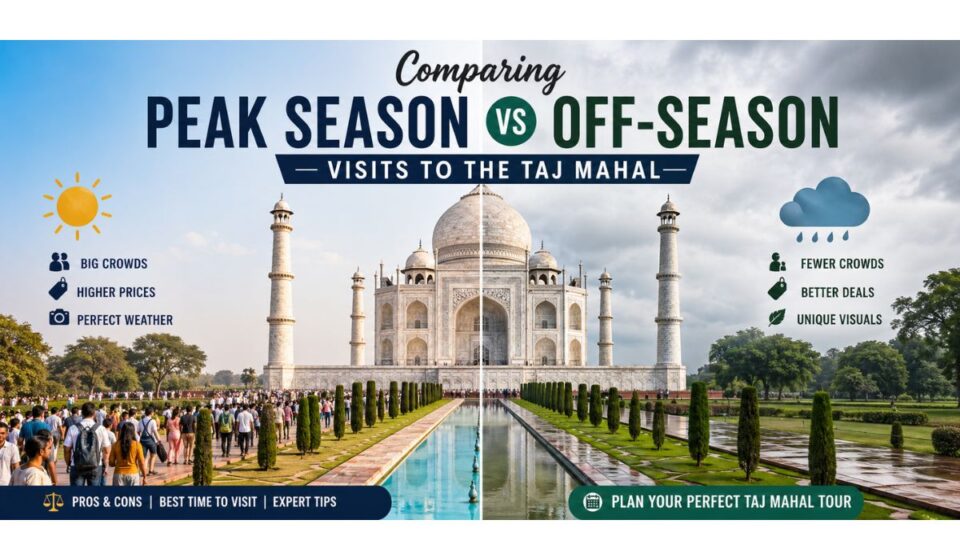

Planning a visit to the Taj Mahal is a dream for many travelers, but choosing when to go can significantly shape your experience. From cool winter mornings filled with tourists to quieter summer afternoons with fewer crowds, each season offers a different perspective of this iconic monument in Agra. We compare peak season vs off-season visits to help you decide what works best for your travel style, comfort level, and expectations—especially if you’re considering a private Taj Mahal tour.
What Is Peak Season at the Taj Mahal?
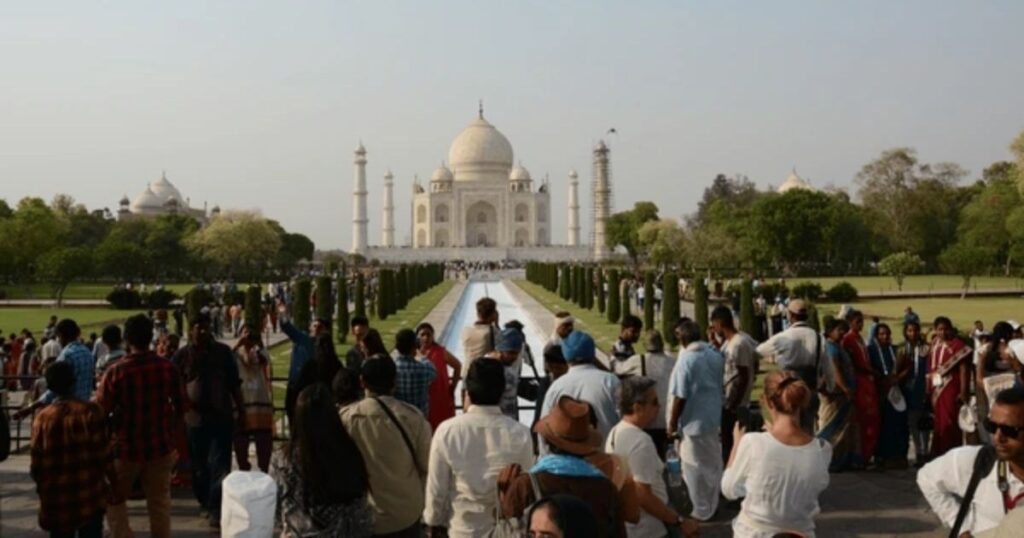
Peak season generally runs from October to March, when the weather is pleasant and ideal for sightseeing.
✅ Pros of Visiting During Peak Season
1. Comfortable Weather
Winter months bring cooler temperatures, making long walks and monument exploration comfortable—especially for families and senior travelers.
2. Clear Skies & Photography
Fog-free mornings (except late December/January) offer stunning views and ideal lighting for photos, particularly during sunrise visits.
3. Full Tourist Infrastructure
Hotels, guides, restaurants, and transport services operate at full capacity, offering a wide range of options and smooth logistics.
4. Ideal for First-Time Visitors
If this is your first visit, peak season provides a “classic” Taj Mahal experience with maximum accessibility.
❌ Cons of Visiting During Peak Season
1. Large Crowds
Expect long queues at entry gates, especially between 8 AM and 11 AM.
2. Higher Prices
Hotels, transport, and guided tours often cost more due to high demand.
3. Less Privacy
Crowds can limit quiet moments and make photography more challenging.
What Is Off-Season at the Taj Mahal?
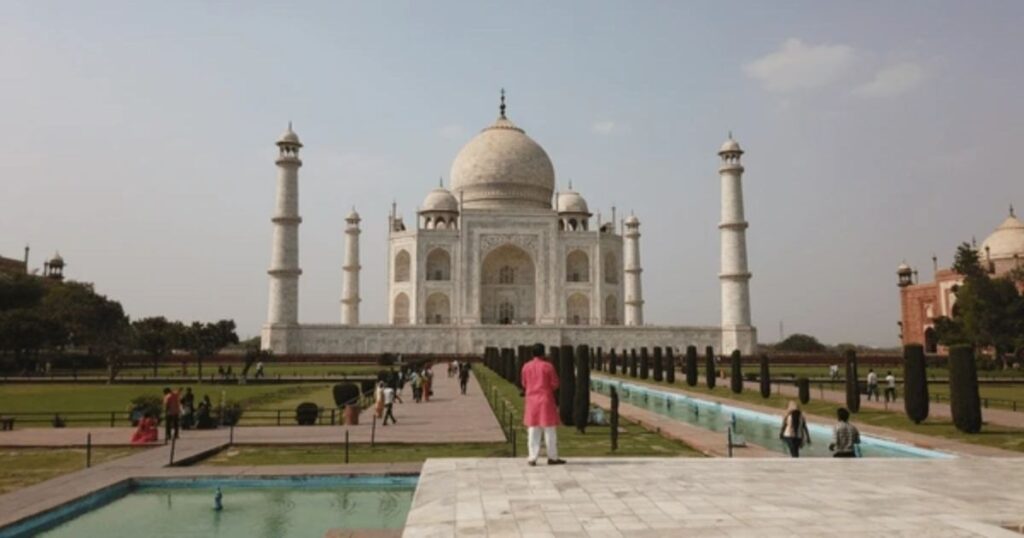
Off-season typically includes April to September, covering summer and monsoon months.
✅ Pros of Visiting During Off-Season
1. Fewer Tourists
You can explore the Taj Mahal at a relaxed pace, enjoy peaceful views, and take unobstructed photos.
2. Better Deals
Hotels and private tour services often offer discounted rates during off-season months.
3. Unique Visuals
Monsoon season adds lush greenery to the surroundings, giving the monument a different, dramatic charm.
4. Personalized Experience
Private tours feel more exclusive when crowds are minimal, allowing guides to tailor the visit to your interests.
❌ Cons of Visiting During Off-Season
1. Hot Weather (Summer)
Temperatures can exceed 40°C, making midday sightseeing uncomfortable.
2. Rain Disruptions (Monsoon)
Unexpected showers may affect timing and visibility.
3. Limited Outdoor Comfort
Long stays outdoors can be tiring without proper planning.
Peak Season vs Off-Season: Quick Comparison
| Factor | Peak Season (Oct–Mar) | Off-Season (Apr–Sep) |
| Crowd Level | Very High | Low |
| Weather | Pleasant & Cool | Hot / Humid |
| Costs | Higher | Lower |
| Photography | Bright & Classic | Dramatic & Quiet |
| Privacy | Limited | Excellent |
Which Season Is Best for a Private Taj Mahal Tour?
A private Taj Mahal tour helps balance the drawbacks of both seasons:
- In peak season, private tours allow early entry, skip-the-line access, and efficient planning to avoid crowds.
- In off-season, private tours ensure air-conditioned transport, flexible timing, and comfort during extreme weather.
If you value comfort and iconic views, peak season is ideal.
If you prefer peace, savings, and exclusivity, off-season may suit you better.
Expert Tip: The Best of Both Worlds
Consider visiting during early October or late March. These shoulder months offer:
- Moderate crowds
- Comfortable weather
- Balanced pricing
A sunrise private tour during these months often delivers the most rewarding experience.
FAQ
1. What is the peak season to visit the Taj Mahal?
Peak season runs from October to March, when the weather in Agra is cool and comfortable, making it ideal for sightseeing and photography.
2. Which months are considered off-season for the Taj Mahal?
The off-season includes April to September, covering the hot summer and monsoon months when tourist numbers are lower.
3. Is it better to visit the Taj Mahal in peak season or off-season?
Peak season is best for pleasant weather and classic views, while off-season is ideal for travelers who prefer fewer crowds, better prices, and a quieter experience.
4. Are Taj Mahal tickets cheaper in the off-season?
Entry ticket prices remain the same year-round, but hotels, transport, and private tours are often more affordable during the off-season.
5. Does off-season weather affect sightseeing at the Taj Mahal?
Summer heat and occasional monsoon rain can affect comfort, but early morning or late afternoon visits help minimize weather challenges.
6. Which season is best for Taj Mahal photography?
Peak season offers clear skies and balanced lighting, while off-season provides dramatic clouds, greenery, and fewer people in photos.
7. Is a private Taj Mahal tour recommended during peak season?
Yes, private tours are especially helpful in peak season as they allow better timing, crowd avoidance, and personalized guidance.
8. Can I enjoy a peaceful visit during peak season?
Yes, choosing a sunrise visit or a private guided tour helps avoid heavy crowds even during busy months.
9. Are monsoon visits to the Taj Mahal safe?
Yes, the Taj Mahal remains open during monsoon season. Visitors should plan flexibly and carry rain protection.
10. What is the best month for a balanced Taj Mahal experience?
October and March are considered shoulder months, offering moderate weather, fewer crowds, and reasonable travel costs.
Final Thoughts
There’s no single “best” time to visit the Taj Mahal—only the time that fits your travel goals. Whether you choose the lively charm of peak season or the quiet beauty of off-season, thoughtful planning and a private tour can transform your visit into a truly unforgettable journey.
If you’re unsure which season suits you best, our local experts are always happy to help you plan the perfect Taj Mahal experience.